
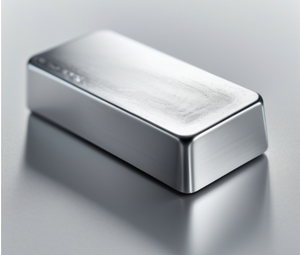

Superconducting qubits remain one of the leading architectures in quantum computing. These devices depend on precisely fabricated thin-film circuits that operate at millikelvin temperatures and require materials with extremely tight property control. High purity aluminum — from 4N (99.99%) through 6N5 (99.99995%) — is a foundational material in qubit fabrication due to its reliable superconductivity, excellent thin-film performance, and low impurity levels.
High Purity Aluminum (HPA) Distribution supplies the consistent, well-characterized ultra high purity aluminum that research labs and quantum computing companies rely on for reproducible device performance.
Why Aluminum Is Used in Superconducting Qubit Devices
Many superconducting qubit platforms use Josephson junction circuits made from thin aluminum films on silicon or sapphire substrates. When cooled below ~1.2 K in dilution refrigerators, aluminum becomes superconducting and forms the basis for microwave resonators and qubit circuits.
Key advantages include:
- Superconductivity below 1.2 K — ideal for dilution refrigerator temperatures
- Natural aluminum oxide layer — forms the tunnel barrier in Al/AlOx/Al Josephson junctions used in transmon qubits
- Excellent compatibility with evaporation and sputtering deposition
- Low microwave loss in the superconducting state
- Well-characterized behavior at millikelvin temperatures
Thin Film Deposition of Aluminum in Qubit Fabrication
Superconducting qubits are built using high-quality aluminum thin films deposited by evaporation or sputtering.
- Thermal & Electron-Beam Evaporation — The standard method for Josephson junctions. High purity aluminum pellets, slugs, and granules are the preferred source material for double-angle evaporation processes.
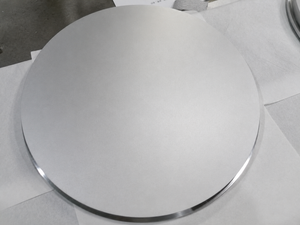
- Sputtering Deposition — Used for ground planes, resonators, and interconnect layers. High purity aluminum sputtering targets provide precise thickness control and minimal contamination.
- Molecular Beam Epitaxy (MBE) — Advanced hybrid devices often require 6N5 MBE-grade aluminum for epitaxial growth.
Purity Considerations for Quantum Device Fabrication
Material purity directly impacts film quality, junction uniformity, and qubit coherence times. Impurities can create two-level system defects, increase microwave loss, or reduce device yield.
- 5N Aluminum (99.999%) — Standard choice for most thin-film deposition and general qubit fabrication
- 6N Aluminum (99.9999%) — Preferred when minimizing trace contaminants is critical for performance and reproducibility
- 6N5 Aluminum (99.99995%) — Used in MBE processes and the most demanding research environments
High Purity Aluminum (HPA) Distribution stocks the full range from 4N to 6N5 and helps fabrication teams select the optimal grade for their specific process.
Aluminum Material Forms Used in Quantum Fabrication
Quantum labs and foundries require aluminum in several forms:
- Pellets, Slugs & Granules — for electron-beam evaporation of junctions and wiring
- Sputtering Targets — for resonators, ground planes, and interconnects
- 6N5 MBE-grade Aluminum — for epitaxial deposition in hybrid devices
- Foil & Sheet — for experimental hardware and fixtures
- Rod & Plate — for cryogenic instrumentation and structural components
- Wire — for low-temperature electrical connections
Custom sizes and machining are available.
Supporting Next-Generation Quantum Device Fabrication
As superconducting qubit technology scales from laboratory prototypes toward manufacturable systems, the need for tightly controlled, high-purity source materials continues to grow. High Purity Aluminum (HPA) Distribution delivers the consistency required for reliable thin-film deposition and reproducible results.
Planning Your Aluminum Supply
High Purity Aluminum (HPA) Distribution maintains ready inventory of 4N through 6N5 ultra high purity aluminum in all major forms. Most domestic orders ship within 1–2 business days and international orders within 2–5 business days via UPS/FedEx.
Frequently Asked Questions
What purity level is best for superconducting qubit fabrication?
5N is standard for most processes. 6N or 6N5 is recommended for high-coherence devices, MBE growth, and applications where minimizing two-level system defects is critical.
Why is aluminum the preferred material for Josephson junctions?
Its natural oxide layer forms a reliable tunnel barrier in Al/AlOx/Al junctions, it superconducts at ~1.2 K, and it deposits cleanly with low microwave loss.
Do you supply materials for both evaporation and sputtering?
Yes. We stock high purity aluminum pellets/slugs for evaporation and sputtering targets in 5N, 6N, and 6N5 grades.
What is 6N5 MBE-grade aluminum used for?
It is used in advanced epitaxial deposition for hybrid semiconductor-superconductor qubits and other cutting-edge quantum architectures that demand the lowest possible impurity levels.
How fast can we get material for urgent fabrication runs?
Most domestic orders ship within 1–2 business days. We keep stock on hand to support fast-moving quantum research timelines.
Do you provide certification?
Yes — GDMS reports and Certificate of Analysis (COA) are standard for all 5N+ orders.
Ready to Source Ultra High Purity Aluminum for Your Qubit Fabrication? ORDER NOW
GDMS-certified materials with fast, reliable delivery for your next fabrication run.